
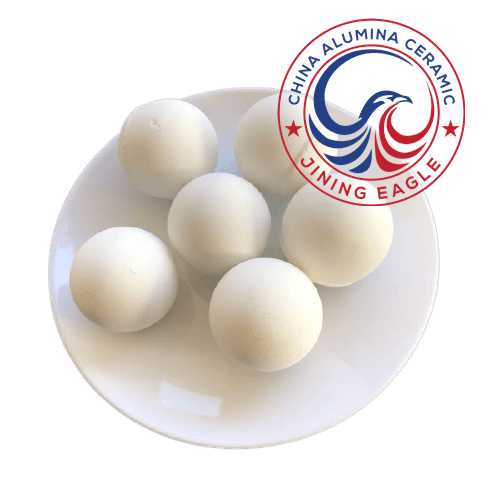

Are alumina grinding balls cost-effective and how should they be maintained for optimal performance?
Despite higher initial costs compared to some other grinding media, alumina grinding balls offer significant cost savings over time due to their durability and reduced need for replacement. Proper handling, storage in dry conditions, and regular inspection for wear are crucial for maintaining their effectiveness and prolonging their lifespan in industrial grinding operations.
What sizes and specifications are available for alumina grinding balls?
Alumina grinding balls come in various sizes typically ranging from 1 mm to 50 mm in diameter, with specific formulations and densities tailored to different milling and grinding requirements across industries. They are designed to withstand high-pressure environments and ensure optimal grinding efficiency.
How do alumina grinding balls compare to other types of grinding media?
Compared to steel balls or glass beads, alumina grinding balls provide superior wear resistance and longer lifespan. They contribute to higher product quality and operational efficiency by minimizing media consumption and maintaining consistent grinding performance.
What advantages do alumina grinding balls offer and which industries use them?
These balls offer high hardness (9 Mohs), exceptional wear resistance, and chemical inertness, making them ideal for grinding applications requiring durable and contamination-free milling media. Industries utilizing alumina grinding balls include mining, pharmaceuticals, and materials processing.
What are alumina grinding balls used for and how are they manufactured?
Alumina grinding balls are used in ball mills for grinding and pulverizing purposes in industries such as ceramics, cement, paints, pigments, and chemicals. They are manufactured from high-purity alumina ceramics, typically with alumina content ranging from 92% to 99.5%, through a shaping and firing process that ensures high density and hardness.
WHAT IS Alumina Grinding Balls (Dry Grinding)
Alumina balls are abrasive media for faster grinding and precise and deep processing ceramic raw materials and glaze materials. They’re built by isostatic pressure molding, with the purpose of making the grinding process more efficient. To achieve that, they’re designed to diminish the loss of grinding media in fine crushing machines (such as ball mills, can-type mills, and vibration mills), surpassing common ball stones and natural cobblestones by far.
Alumina ceramic Grinding Balls applications
Glassworks, cement plants, and enamel factories frequently take benefit from these high-density, high-hardness Alumina balls that do not wear out and do not contaminate. Other fields of application include electronics, ceramics, geology, chemical engineering, metallurgy, refractory materials, paints, and inks. As long as there are metal and non-metal dry powder grinding tools, alumina grinding balls have a place in the business, whatever it is.
Alumina Grinding dry Balls Advantages
This is a high-quality alumina grinding balls product that’s lighter than steel balls, and at the same time, much harder than them (Rockwell hardness for normal alumina balls is as high as 78). Alumina balls is a small (around 4-6 nm), non-magnetic electrical insulator that easily overcomes heat (up to 1000ºC), acid, alkali, corrosion, abrasion, rust, and unlubricated rolls.
In addition, alumina balls keep the ball mills from harm by elevating their utilizable volume, which extends their lifespan considerably.
Note: the high quality of the ground Grinding Ball has not been compromised to achieve the whiteness of the product.
HIGH Alumina ceramic grinding ball Chemical Composition & Technical Parameter
Item | AK-75 | AK-92 | AK-95 |
Al2O3 (%) | ≧75 | ≧92 | ≧95 |
BulK DENSITY (g/cm3) | ≧3.20 | ≧3.60 | ≧3.65 |
Moh’s Hardness | 7.5 | 9 | 9 |
Wear Loss (%) | <0.015 | <0.015 | <0.012 |
Water Absorption (%) | <0.02 | <0.01 | <0.01 |
Color | White | White | White |
Size (mm) | 13-90mm | ||
Size
| Diameter(mm) | Φ 13 | Φ 25 | Φ 30 | Φ 40 | Φ 50 | Φ 60 | Φ 70 |
| Tolerance(mm) | ±1 | ±1 | ±1.5 | ±1.5 | ±2 | ±2 | ±3 |
We also have available all sizes of Al2O3 Alumina balls in between Φ3mm and including Φ60mm. Other contents of Al2O3 60% – 70%, 65% – 75%, 92% – 95%, and above 99%.
Isostatic press processing Alumina Cermic Grinding Ball
Questions and answers about Alumina grinding ball application solutions
Welcome to inquire and purchase our 92% and 95% Alumina ceramic grinding balls. High-quality Al2O3 ceramic balls are the best companion for ball mills, which can save you 15%- 30% of the cost.


